
Fleet Intel with Steve · Issue #1 · Materials
New concrete, asphalt, and steel research with Arizona ties, and what is still in the lab.
The gist
- Researchers are testing concrete made with food scraps and seaweed, with ASU collaborating.
- ADOT is studying recycled plastics in road materials.
- Lighter, stronger steel frames are still at the research stage.
Sources are linked under each item below.
Concrete made with food scraps and seaweed (with ASU as a collaborator)
Nov 11, 2026
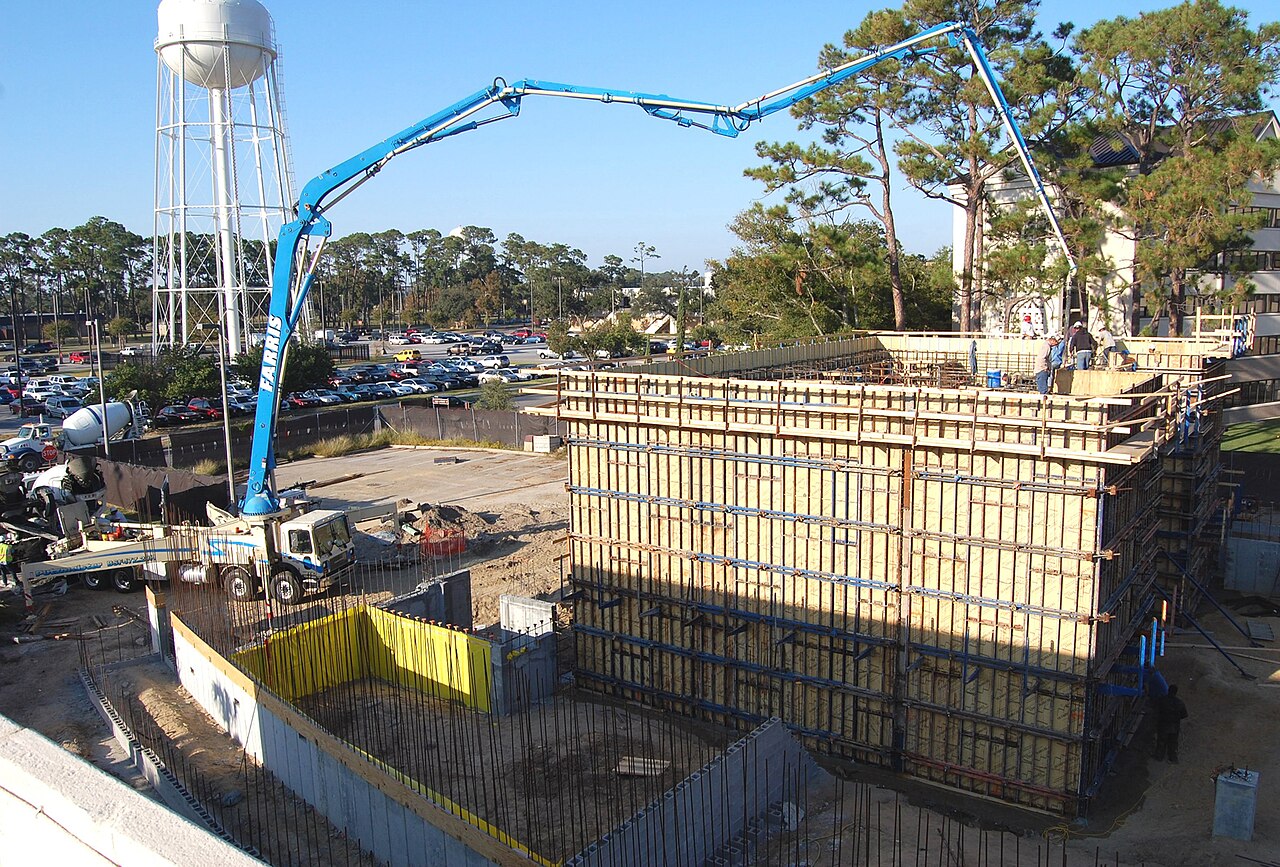
Photo: Steve Pivnick, U.S. Air Force / Public domain, via Wikimedia Commons — https://commons.wikimedia.org/wiki/File:Construction_site_with_concrete_pump_truck.JPG

A University of Miami team received a four-year USDA grant to develop bio-based "green" concrete using food waste, sargassum seaweed, biochar, and plant proteins. The team says early tests show durability that rivals or exceeds conventional concrete, plus self-healing properties that slow corrosion. They'll use AI to optimize mixes and detect cracks. Arizona State University researchers will collaborate; their role is still being set.
Why it matters to your fleet: It's early research, but self-healing concrete could mean fewer patch-and-repair jobs on public works.
Sources: news.miami.edu
Self-healing crack repair (CU Boulder) and "Roman concrete" goes commercial (MIT)
- CU Boulder: a National Science Foundation award backs a bacterial-nanocellulose repair technology for active and dormant cracks (Aug. 25, 2026). colorado.edu
- MIT: the startup DMAT is commercializing self-healing concrete based on ancient Roman lime-clast chemistry (Aug. 19, 2026). MIT
Why it matters to your fleet: Watch these for future DOT specs on bridge decks and barriers.
Asphalt: ADOT is studying upcycled plastics; ASU has rubber-plastic binder tech
Arizona Transportation Institute SPR-819 project page (2026); ASU Skysong listing; Lab Partnering Service listing
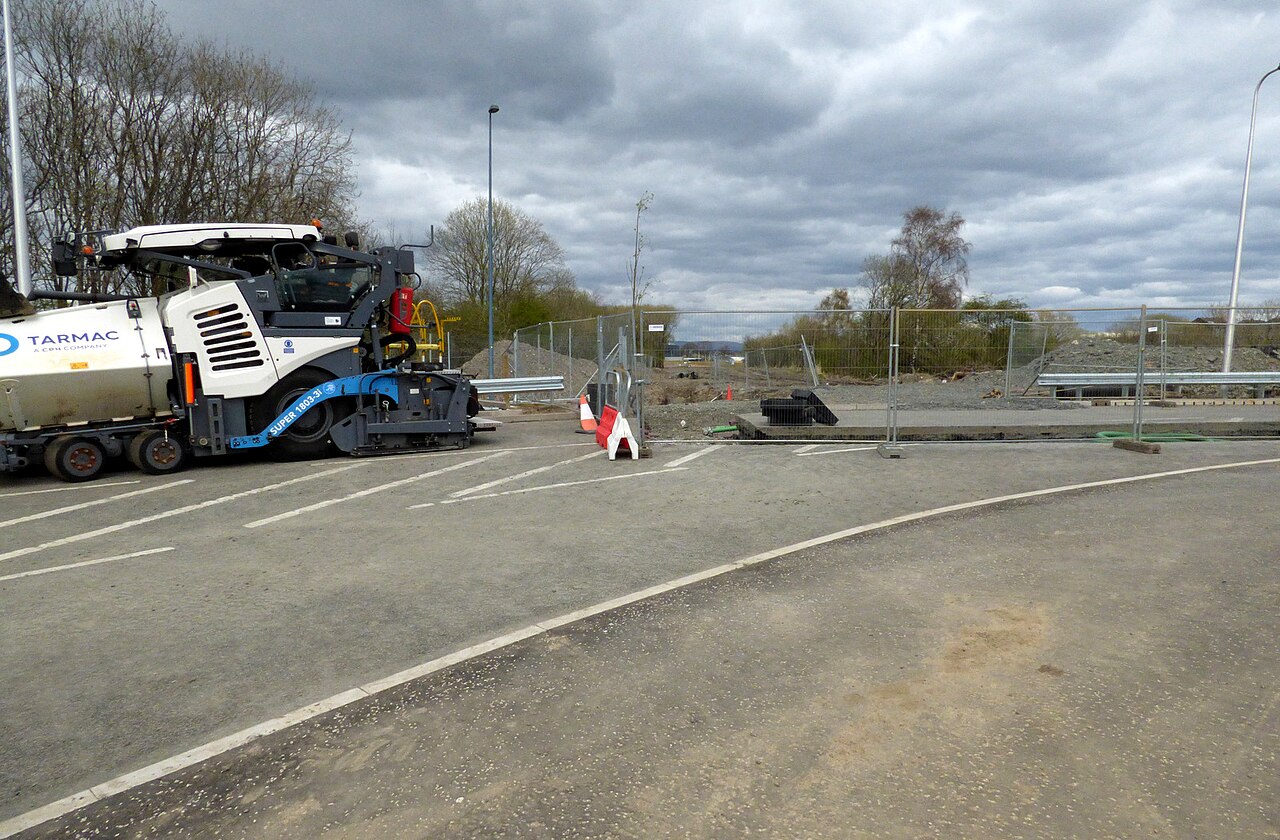
Photo: Thomas Nugent / CC BY-SA 2.0, via Wikimedia Commons — https://commons.wikimedia.org/wiki/File:Asphalt_paving_machine_-_geograph.org.uk_-_7349239.jpg

ADOT research project SPR-819 (Aug. 2026–May 2027) is evaluating upcycled waste plastics in fill, aggregates, and other transportation infrastructure materials. ASU's licensing office lists "Bio-RPG/Bio-RG" technology that combines treated crumb rubber and functionalized plastics to improve rutting and cracking resistance. NREL and ASU have also developed waste-plastic composites compatible with standard hot-mix asphalt production.
Why it matters to your fleet: Arizona already leads in rubberized asphalt, and plastics could be next in ADOT specs. Paving contractors should watch the SPR-819 results.
Sources: Arizona Transportation Institute · ASU Skysong Innovations · Lab Partnering Service
Steel: lighter, stronger frames through new alloys and smarter design (research stage)
2026 (MRL); Nov 2, 2026 (MDPI Vehicles)
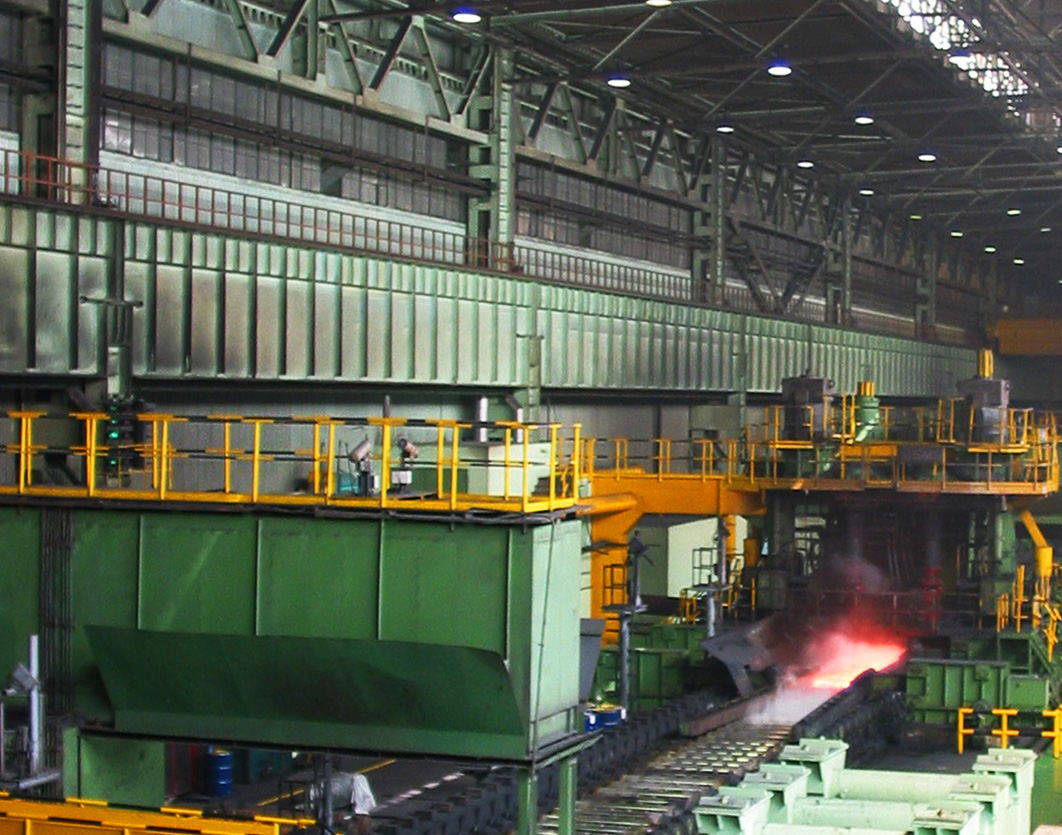
Photo: Erik Charlton from Menlo Park, USA / CC BY 2.0, via Wikimedia Commons — https://commons.wikimedia.org/wiki/File:"Hot"_Rolling_Some_Steel_(2267617927).jpg

A 2026 Materials Research Letters paper reports a lean TRIP steel reaching about 1.5 GPa tensile strength with 15.7% elongation using fast annealing, which the authors call an industrially viable process. A Nov. 2, 2026 review of truck and trailer frame optimization (68 studies) found same-material frame redesigns save about 7–16% of mass, and up to 28% for steel longitudinal beams in one numerical study.
Why it matters to your fleet: Lighter frames mean more legal payload. None of this is in production trucks yet.
Sources: Journal (DOI) · MDPI
← Back to Issue #1: all stories
Meet Steve
Your vehicles shouldn’t be one of your stressors
I’m Steven Nohrden, a Commercial/Government Account Manager for Ford Vehicle Sales with Chapman Ford Pro Elite in Scottsdale. I work with construction, trades, mining, and government fleets across Arizona and the Southwest. Here’s what working with me looks like:
- Weekly, customized updates on every unit you have coming.
- Full transparency on ETAs and upfits, including the delays.
- Fast, frequent communication. You won’t have to chase me.
- Someone pushing for you. Ford’s national account teams know me as polite, respectful, and always first to push for my customers. That goodwill gets my customers extra attention.
“With Steve, the answer’s yes, what’s the question so I can get it done.”
Hit reply and tell me what you need. I read every response.
| Email Steve |
Independent publication. Fleet Intel with Steve is an independent newsletter written by Steven Nohrden. It is not sponsored, endorsed, or published by Ford Motor Company or Ford Pro, and the views here are my own. Ford, F-150, Super Duty, Transit, E-Series, Police Interceptor, Ford Pro, and Ford Energy are trademarks of Ford Motor Company, used here only to identify products and news.
Researched and drafted with help from Steven Nohrden’s SI personal assistant (Grok Bot)  Steve reviews every issue, but mistakes are possible. Please check the linked sources before relying on any item.
Not legal or compliance advice. Regulations differ by state and change often. Confirm requirements with the agency linked in each item before you act. Items marked “Unconfirmed — insider intel” are early information we could not fully verify by press time.
Photos. Images are public domain or Creative Commons photos from Wikimedia Commons, plus original diagrams, each credited directly under the image. Some are illustrative rather than the exact vehicle or site in the story. Manufacturer badges were blurred where noted.
© 2026 Steven Nohrden. All rights reserved.
| Email Steve |