
Fleet Intel with Steve · Issue #1 · Rules & Regulations
What changed this fall in federal, Arizona, New Mexico, California, and Texas truck rules, and what is still only a proposal.
The gist
- EPA’s 2027 NOx rule is still a proposal, with a Jan. 1, 2027 start date.
- Arizona and Texas issued temporary diesel emergency orders; construction fleets don’t qualify for Arizona’s ag relief.
- California dropped private-fleet ACF mandates; government fleets are still covered.
Sources are linked under each item below.
EPA's 2027 heavy-duty NOx rule: still not final, still due Jan. 1
EPA proposal published July 14, 2026; Transport Topics, Nov 12 and Nov 20, 2026; OMB/OIRA pending-review list (received Nov 19, 2026; stage: Final Rule); Federal Register search, Nov 21, 2026 (no final rule); FleetOwner (Q4 2026); FreightWaves (late Oct 2026)
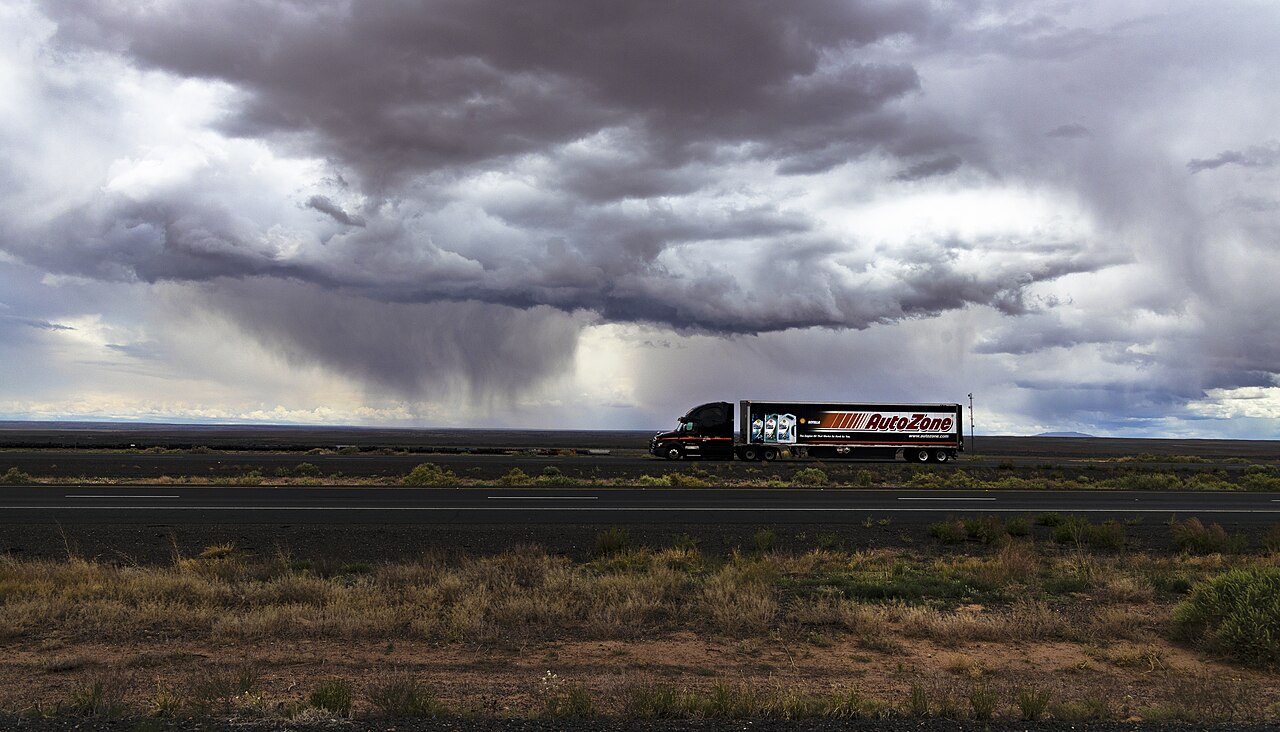
Photo: Janusz Sobolewski from Mississauga, Ontario, Canada / CC BY 2.0, via Wikimedia Commons — https://commons.wikimedia.org/wiki/File:Interstate-40,_Winslow,_Arizona_(47014879684).jpg

EPA's July 2026 proposal keeps the 0.035 g/hp-hr NOx standard starting Jan. 1, 2027, about an 80–87% cut. It also proposes relief: keeping emissions warranties at 5 years/100,000 miles instead of 10 years/450,000; pushing the longer useful-life requirement to 2030; replacing DEF-related derates and speed limits with audible/visual warnings; and letting engine makers pay non-conformance penalties instead of fully meeting the standard. As of Nov. 21, the final rule still hadn't been published in the Federal Register. EPA sent the final rule to the White House Office of Management and Budget for review on Nov. 19, one of the last steps before it can be issued; a final rule generally can't take effect until 30 days after publication unless an exception applies. Earlier, Cummins said it expected the rule in December, and Rush Enterprises' CEO said it may not come until January or February. Daimler has warned of legal challenges over the penalty provision and says its Detroit Gen 6 DD13/DD15 will be fully compliant. Under the July proposal, an engine certified at 100 mg/hp-hr would owe a $5,875 nonconformance penalty, versus $904 at 45 mg/hp-hr. The uncertainty is hitting orders: North American Class 8 net orders were 13,500 in October, down 45% from a year earlier (ACT Research, via Transport Topics).
Why it matters to your fleet: Class 6–8 diesel spec and timing decisions for 2027 are still being made off a proposal. Proposed changes like DEF derate relief have no legal effect until EPA finalizes them.
State rules disclaimer: Federal EPA rules set the floor. State rules vary and change often. California (CARB) and other states may have stricter or different requirements; confirm with EPA (EPA) and, for California, CARB (CARB) before acting.
Sources: EPA · Transport Topics · OMB review list (reginfo.gov) · Transport Topics (2) · FleetOwner · FreightWaves · Trucknews
Federal truck CO₂ (GHG Phase 3) rules are gone, but NOx/PM rules remain
Final rule Feb 12, 2026 (FR Feb 18, 2026); effective Apr 20, 2026; NWRA summary Mar 2026
On Feb. 12, 2026, EPA rescinded the 2009 greenhouse-gas Endangerment Finding and repealed all federal GHG standards for light-, medium-, and heavy-duty vehicles and engines, including Heavy-Duty GHG Phase 3. The repeal took effect April 20, 2026. Traditional pollutant rules (NOx, particulate) are unaffected. A March 2026 industry summary notes that NHTSA's separate heavy-duty fuel-consumption standards remain in effect.
Why it matters to your fleet: Federal pressure to buy zero-emission trucks for CO₂ compliance is off, but the 2027 NOx rule (2.1) still drives 2027 engine changes.
State rules disclaimer: The federal repeal doesn't override state programs. State rules vary and change often. California (CARB) and other states may have stricter or different requirements; confirm with CARB (CARB) or your state environmental agency before acting.
Sources: EPA · Federal Register · NWRA
Diesel emergency: Arizona and Texas loosen dyed-diesel and weight rules as prices stay high
AZ EO Oct 13, 2026 (AZFamily Oct 13; State & Nation Oct 27); TX Sept 28, 2026; EPA waiver Oct 20, 2026; EIA week of Nov 16, 2026; Logistics Management Nov 10, 2026
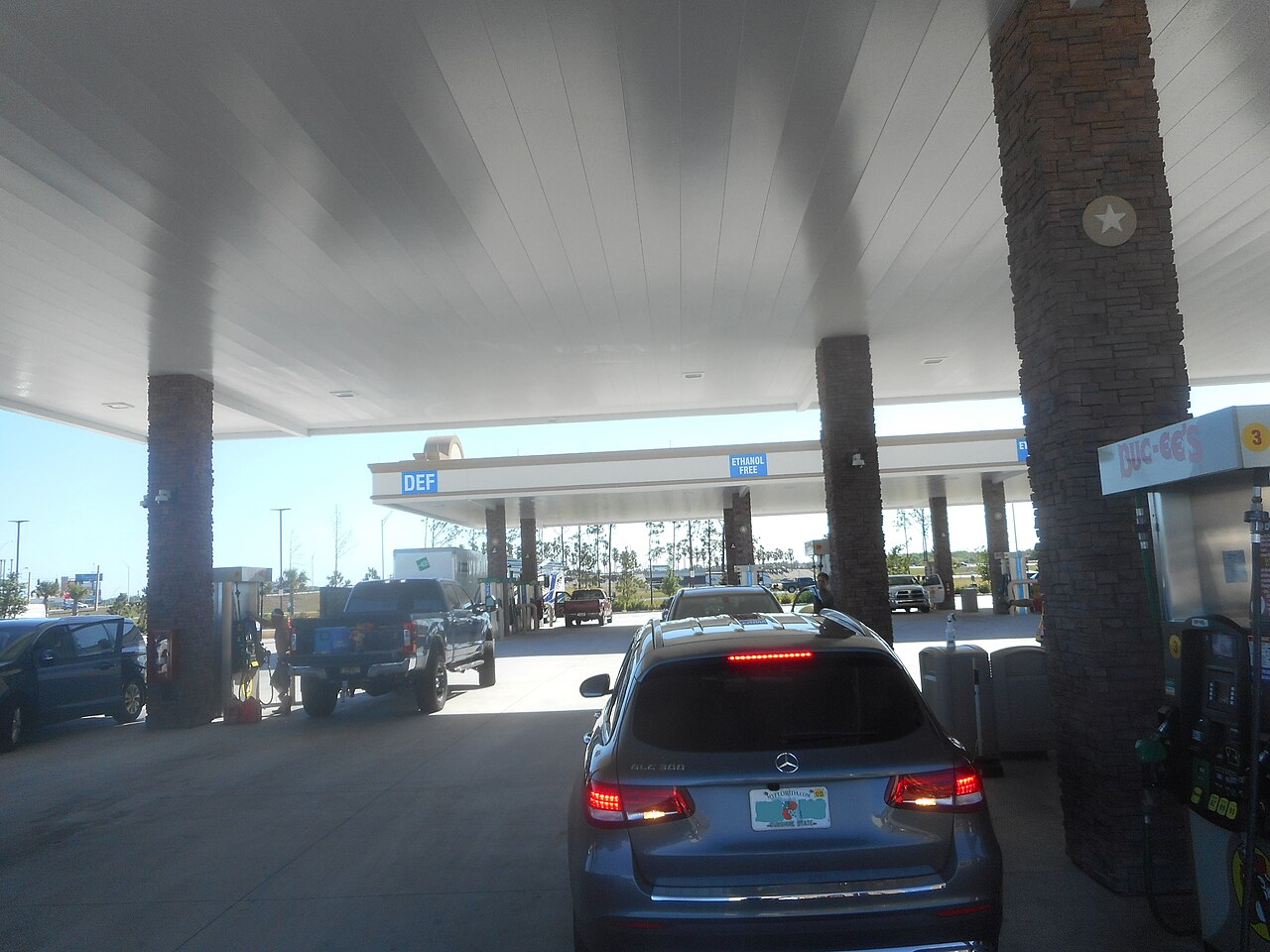
Photo: DanTD / CC BY-SA 4.0, via Wikimedia Commons — https://commons.wikimedia.org/wiki/File:Diesel_Exhaust_Fluid_&_Ethanol_Free_Pumps_@_Buc-ees_DB.jpg

- Arizona: Gov. Hobbs signed Executive Order 2026-03 on Oct. 13, declaring a diesel-market emergency tied to Middle East conflict and Strait of Hormuz shipping disruptions. From Oct. 16 through Dec. 31, 2026, it lets vehicles used only for agriculture run red-dyed diesel on non-interstate highways (enforcement deprioritized) and get no-fee overweight permits for 80,001–90,800 lb loads on non-interstate highways. It does not cover general freight, construction materials, or interstates, which stay at 80,000 lb.
- Texas: Gov. Abbott's Sept. 28 disaster proclamation allows expanded dyed-diesel use on roads, raises fuel/agricultural/timber loads to 95,000 lb gross, and suspends TxLED rules to the extent EPA allows. EPA issued a TxLED/ULSD emergency fuel waiver on Oct. 20.
- The market: EIA's U.S. average on-highway diesel was $5.937/gal for the week of Nov. 16, down 19 cents from the week before (California $7.733; Rocky Mountain $6.011; West Coast less California $6.269). Logistics Management reported 16 straight weeks above $5 as of Nov. 10. One DAT analyst expects diesel to stay high through next year.
Why it matters to your fleet: Fuel is the budget wildcard for 2027. Construction and government fleets do not qualify for Arizona's ag relief, so don't let operators assume dyed diesel is OK on the road.
State rules disclaimer: Emergency orders are temporary and state-specific (Arizona's runs through Dec. 31, 2026, and is limited to ag vehicles). State rules vary and change often. California (CARB) and other states may have stricter or different requirements; confirm with ADOT (ADOT), AZ DPS (AZ DPS), TxDMV (TxDMV), or TCEQ for TxLED (TCEQ) before acting.
Sources: AZFamily · Connect Express · Texas Governor · TxDMV · EPA · EIA · Logistics Management
California ACF: private-fleet mandates repealed; government fleets still covered
Effective Sept 10, 2026 (CRTA)
Amendments to CARB's Advanced Clean Fleets rule took effect Sept. 10, 2026. They repeal the High-Priority (private) and Drayage fleet requirements. The state and local government fleet rules remain, covering vehicles over 8,500 lb GVWR: per CRTA, the 50% ZEV purchase requirement moved to Jan. 1, 2027 and the 100% requirement to 2030, with small-fleet and low-population-county exemptions extended to 2030. CARB now says private contractors are covered only when a public agency dispatches their vehicles. NTEA and SEMA dropped their lawsuit after the repeal.
Why it matters to your fleet: Private contractors working in California are largely off the hook. Public agencies, and contractors under a California agency's operational control, still need a ZEV purchase plan.
State rules disclaimer: State rules vary and change often. California (CARB) and other states may have stricter or different requirements; confirm current ACF applicability with CARB (CARB) before acting.
Sources: CRTA · CRTA (2) · CARB · NTEA
New Mexico: Advanced Clean Trucks sales targets start with MY2027 (on paper)
NMED page dated July 22, 2026
NMED's page (updated July 22, 2026) still lists ACT requirements for manufacturers. For MY2027, 15% of Class 2B–3 and 20% of Class 4–8 trucks delivered for sale in New Mexico must be zero-emission, rising in later years. The rule applies to manufacturers, not buyers, and doesn't ban gas or diesel trucks.
Unconfirmed — insider intel: We couldn't confirm how New Mexico will enforce ACT after the 2025 federal actions against California's truck waivers. Ask the OEM or dealer whether MY2027 New Mexico allocations are affected.
Why it matters to your fleet: New Mexico fleets could see allocation quirks on new medium/heavy trucks if manufacturers manage to the targets.
State rules disclaimer: State rules vary and change often. California (CARB) and other states may have stricter or different requirements; confirm ACT status and enforcement with the New Mexico Environment Department (NM Environment Dept.) and your OEM/dealer before acting.
Sources: NM Environment Dept.
FMCSA: emergency hours relief back to 30 days; non-domiciled CDL and English-proficiency rules in force
FR Oct 5, 2026; FR Feb 13, 2026; FR Aug 10, 2026
- Emergency HOS: A final rule effective Oct. 5, 2026 restores automatic hours-of-service relief to 30 days (from 14) under regional emergency declarations. It applies only to carriers giving direct assistance, not routine deliveries.
- Non-domiciled CDLs: FMCSA's 2026 final rule limits non-domiciled CLPs/CDLs to H-2A, H-2B, and E-2 visa holders, with in-person verification and validity capped at one year.
- English proficiency: Roadside out-of-service enforcement is active (FMCSA policy MC-SEE-2026-0002). A proposed rule to codify English-proficiency failures as an out-of-service violation was published Aug. 10, 2026, with comments closed Oct. 9.
Why it matters to your fleet: CDL driver vetting now carries real out-of-service risk. Check licensing and English proficiency at hiring.
State rules disclaimer: FMCSA rules are federal, but states issue CDLs and run roadside enforcement. State rules vary and change often. California (CARB) and other states may have stricter or different requirements; confirm with FMCSA (FMCSA) and your state's CDL agency (e.g., ADOT MVD, ADOT) before acting.
Sources: Federal Register · FMCSA · FMCSA (2) · Federal Register (2)
Arizona: ADOT updates commercial rules; I-40 enforcement blitz
Oct 23, 2026; AllCiv Oct 28, 2026; Truck Drivers USA (Oct 2026)
- Commercial rulemaking: ADOT opened a rulemaking (docket R26-189) on Oct. 23 to align Arizona's motor-carrier and hazmat rules with 2025 federal regulations, revising CDL, waiver, testing, and hearing rules.
- Third-party CDL processing: SB 1456, signed June 22, 2026, lets authorized third-party providers perform CDL administrative and/or testing functions as ADOT authorizes.
- Enforcement: An Oct. 6–8 AZDPS/ADOT commercial enforcement detail on I-40 near Flagstaff placed 110 vehicles and drivers out of service after 263 inspections.
Unconfirmed — insider intel: The R26-189 docket details come from a regulatory-tracking site summarizing the Arizona Administrative Register. We're confirming them against the Register itself.
State rules disclaimer: State rules vary and change often. California (CARB) and other states may have stricter or different requirements; confirm Arizona commercial-vehicle and CDL rules with ADOT (ADOT) and AZ DPS (AZ DPS) before acting.
Sources: Bizmoon (reg tracker) · AllCiv · Truck Drivers USA
Texas and federal odds and ends
- Texas: The Transportation Commission proposed reorganizing the rules on which local governments can issue oversize/overweight permits (Sept. 24, 2026; proposed, not adopted). TxDOT
- NHTSA/FMCSA heavy-truck automatic emergency braking mandate: still at the proposal stage, with no final rule as of mid-November. Unified Agenda (reginfo.gov)
State rules disclaimer: State rules vary and change often. California (CARB) and other states may have stricter or different requirements; confirm Texas oversize/overweight permitting with TxDOT (TxDOT) and TxDMV (TxDMV) before acting; federal AEB status can be checked on the Unified Agenda link above.
← Back to Issue #1: all stories
Meet Steve
Your vehicles shouldn’t be one of your stressors
I’m Steven Nohrden, a Commercial/Government Account Manager for Ford Vehicle Sales with Chapman Ford Pro Elite in Scottsdale. I work with construction, trades, mining, and government fleets across Arizona and the Southwest. Here’s what working with me looks like:
- Weekly, customized updates on every unit you have coming.
- Full transparency on ETAs and upfits, including the delays.
- Fast, frequent communication. You won’t have to chase me.
- Someone pushing for you. Ford’s national account teams know me as polite, respectful, and always first to push for my customers. That goodwill gets my customers extra attention.
“With Steve, the answer’s yes, what’s the question so I can get it done.”
Hit reply and tell me what you need. I read every response.
| Email Steve |
Independent publication. Fleet Intel with Steve is an independent newsletter written by Steven Nohrden. It is not sponsored, endorsed, or published by Ford Motor Company or Ford Pro, and the views here are my own. Ford, F-150, Super Duty, Transit, E-Series, Police Interceptor, Ford Pro, and Ford Energy are trademarks of Ford Motor Company, used here only to identify products and news.
Researched and drafted with help from Steven Nohrden’s SI personal assistant (Grok Bot)  Steve reviews every issue, but mistakes are possible. Please check the linked sources before relying on any item.
Not legal or compliance advice. Regulations differ by state and change often. Confirm requirements with the agency linked in each item before you act. Items marked “Unconfirmed — insider intel” are early information we could not fully verify by press time.
Photos. Images are public domain or Creative Commons photos from Wikimedia Commons, plus original diagrams, each credited directly under the image. Some are illustrative rather than the exact vehicle or site in the story. Manufacturer badges were blurred where noted.
© 2026 Steven Nohrden. All rights reserved.
| Email Steve |